








WHO-GMP Certified Pharma Products in India | Waylone Healthcare
In the rapidly growing Indian pharmaceutical market, ensuring patient safety and medicine efficacy depends directly on high manufacturing standards. However, navigating this competitive commercial market requires a clear understanding of simple quality benchmarks. Consequently, for pharmaceutical distributors, PCD pharma franchise owners, wholesalers, and healthcare business partners, sourcing WHO-GMP certified pharma products in India is not merely a legal rule—it is a critical strategy for long-term commercial success. Quality assurance in medicine production goes far beyond basic packaging. Instead, it includes systematic raw material checks, controlled cleanroom areas, calibrated equipment, and strict batch testing. This clear guide explains the main ideas of WHO–GMP standards, key manufacturing steps, simple ways to check pharma suppliers, and how companies like Waylone Healthcare work closely with pharmaceutical business partners across India.
Introduction to WHO-GMP Certified Pharma Products in India
The demand for WHO-GMP certified pharma products in India continues to grow because doctors, chemists, and patients ask for safe, reliable medicines. India serves as a major manufacturing center for generic medicines worldwide. Therefore, government authorities and medicine delivery networks prefer facilities that follow international Good Manufacturing Practices. Choosing certified products protects business owners from product returns, batch changes, and legal compliance issues. When distributors invest in WHO-GMP certified pharma products in India, they gain market trust, build doctor confidence, and ensure good health outcomes across different medical fields.
What is WHO-GMP Certification and What Does GMP Mean?
Good Manufacturing Practice (GMP) is a complete quality system built to lower basic operational risks during medicine manufacturing. Specifically, these risks mainly include unexpected dirt, accidental mixing of chemicals, wrong ingredient amounts, and label mistakes.
The World Health Organization (WHO) created WHO-GMP guidelines to make manufacturing standards simple and equal everywhere. A WHO-GMP certification shows that a specific factory has passed detailed visits and checks by government drug officers. Furthermore, these official visits confirm that the factory makes human medicines safely under clean, controlled, and well-tracked conditions. In addition, this certificate gives international credibility to the business.
Importance of WHO-GMP Standards in Pharmaceutical Manufacturing
Following WHO-GMP standards during factory production stops errors early rather than relying only on final product testing. Because testing single samples evaluates only a small part of a batch, complete process controls must protect every single tablet or bottle made. As a result, manufacturing mistakes are reduced before products reach the market.
Key clear advantages of WHO-GMP compliance include:
- Prevention of Accidental Mixing: Automated machines, separate working rooms, and special air systems keep out dust, tiny germs, and unwanted chemicals. Thus, product purity is kept safe.
- Consistent Batch Quality: Simple, standardized mixing, drying, and filling steps ensure every tablet or liquid dose contains the exact required medicine strength. Likewise, taste and color stay uniform.
- Better Product Shelf-Life: Modern moisture-proof packaging—such as double-aluminum foil packs—and clean liquid filling protect medicines from heat and humidity. Consequently, medicine strength stays effective over time.
- Legal Safety & Business Stability: Certified production protects distributors and franchise associates from legal fines, work stops, and quality arguments. Moreover, it strengthens long-term business relationships.
Key Quality-Control and Quality-Assurance Practices
A strong factory setup depends on two separate but connected teams: Quality Control (QC) and Quality Assurance (QA).
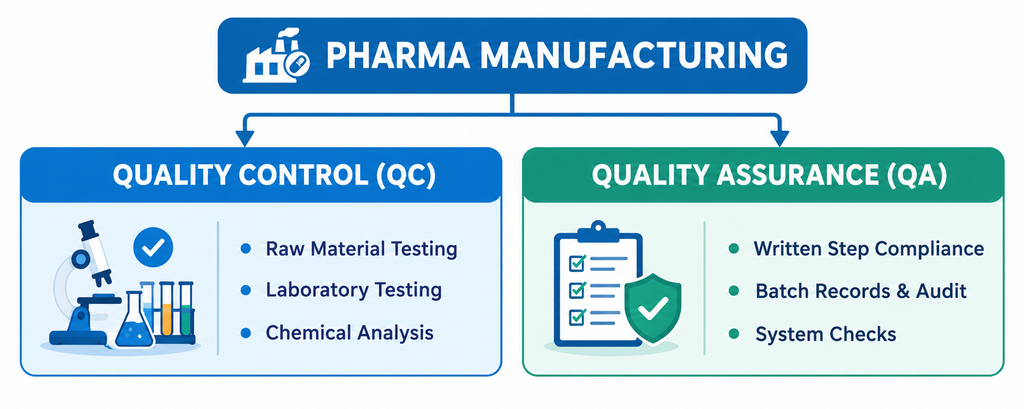
- Quality Control (QC): Focuses on lab testing. Specifically, QC team members test raw chemical powders, liquids, bottles, and finished products using clear lab tools like liquid testing equipment and measure scales.
- Quality Assurance (QA): Focuses on checking factory systems and steps. For instance, QA managers write and check clear working rules, verify line cleaning between batches, and manage printed batch records.
Working together, QA and QC ensure that every delivery of WHO-GMP certified pharma products in India meets exact regulatory requirements. Hence, buyers receive tested and safe formulations every time.
Role of Raw-Material Testing, Hygiene, Documentation, and Validation
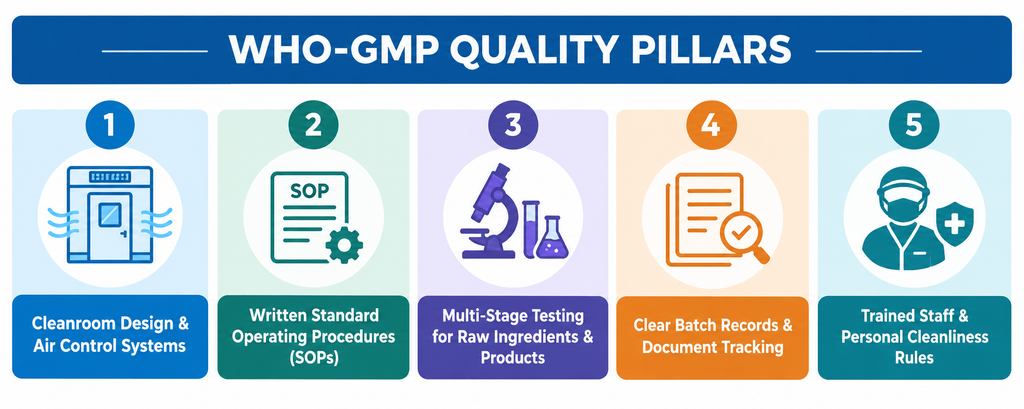
Maintaining clean standards across busy factory lines requires clear attention to basic working steps:
- Raw-Material Testing: Every raw powder and active chemical goes into a holding room upon arrival. Subsequently, lab testers check purity, strength, and safety against official pharmacopoeia books before letting materials enter production.
- Cleanroom Environment & Hygiene: Factory rooms use special air filters to control dust, air flow, and room temperature. In addition, factory workers follow strict washing steps, wear clean suits, and use air showers to keep human dirt away from medicines.
- Clear Documentation & Tracking: Every single batch made creates a printed record book. These documents log every step taken, raw material lot number, mixing time, temperature, and final quantity, thereby ensuring 100% simple product tracking.
- Machine Checks & Final Batch Testing: Factory machines, water cleaning systems, and room heating tools undergo regular safety checks. Meanwhile, finished batches wait in holding areas until final lab tests confirm total safety. Eventually, approved batches move to the dispatch area.
Common Pharmaceutical Dosage Forms in the Market
Commercial supply networks need different medicine forms to meet local doctor needs. Accordingly, high-quality factory production includes several clear dosage choices:
- Oral Solids (Tablets & Capsules): Made as simple fast-release, slow-release, or water-soluble tablets, as well as hard and soft gel capsules.
- Oral Liquids (Syrups & Suspensions): Smooth liquid syrups, stomach enzymes, cough liquids, and child syrups made in clean steel mixing tanks. Furthermore, palatable flavors are added for easier consumption.
- Pediatric Dry Syrups & Drops: Dry antibiotic powders and baby drops that need clean mixed water when used by patients.
- Parenterals (Injections): Sterile liquid vials, glass ampoules, and dry powder injections made in ultra-clean rooms.
- Topical Preparations (Ointments, Creams & Soaps): Smooth skin creams, gels, and medicated soaps made for simple skin treatment.
- Nutraceutical Powders & Sachets: Health protein powders, gut health powders, and energy powders packed in small foil packets.
How to Evaluate a Pharmaceutical Company and Verify Quality Credentials
Before signing supply deals or placing orders for WHO-GMP certified pharma products in India, business partners should follow a simple step-by-step check:
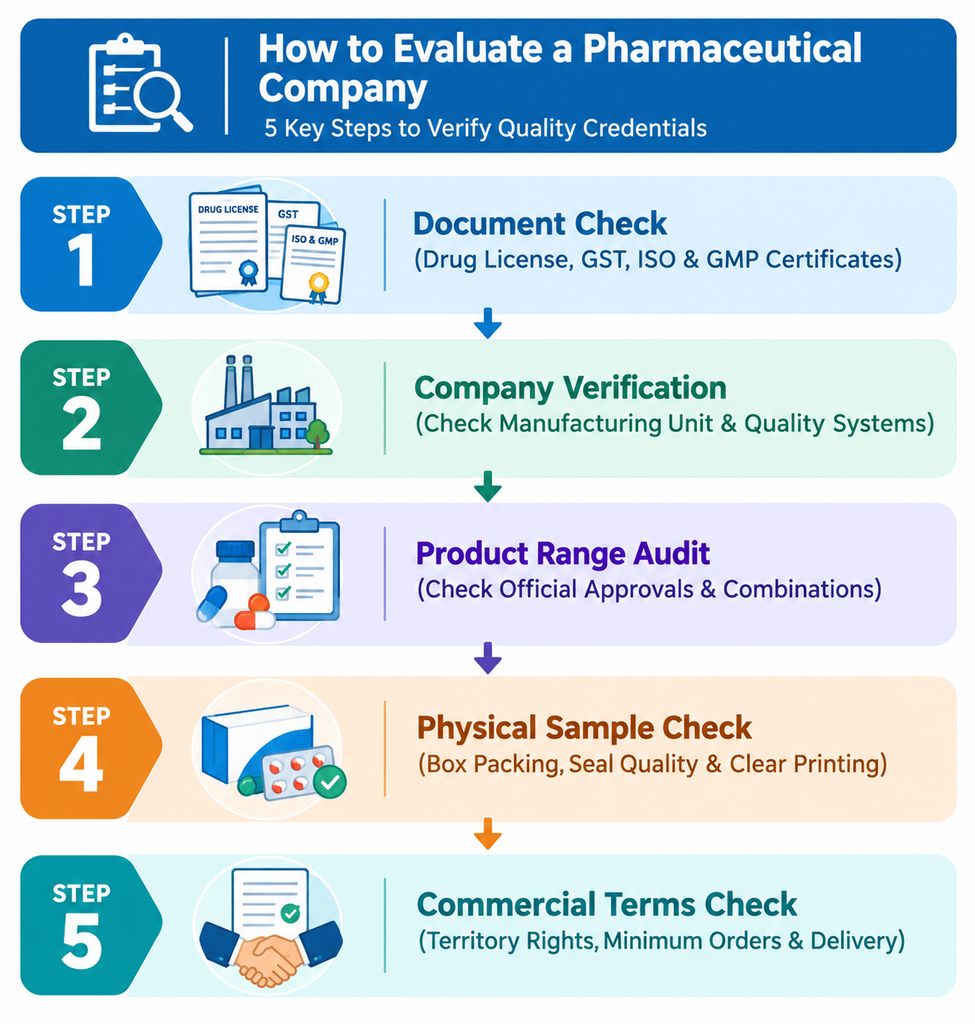
- Check Official Documents:First, ask for copies of valid Wholesale/Retail Drug Licenses, active GST registration, and official WHO-GMP certificates given by drug officers.
- Review Manufacturing Sourcing:Next, confirm if the company makes products in its own unit or sources them from verified WHO-GMP partner factories.
- Inspect Real Product Samples:Then, check physical sample boxes for foil thickness, tight package seals, clear batch numbers, expiry dates, and safe covers.
- Evaluate Market Reputation:Finally, speak with existing franchise partners and chemists to ask about product quality, stock supply speeds, and fair trading practices. Besides, check online partner reviews for better clarity.
Benefits of Quality-Focused Pharma Products for PCD Franchise Partners
Investing in tested, high-quality products gives clear business advantages to local stockists, sales reps, and franchise distributors:
- Stronger Doctor Trust & More Prescriptions: Doctors write prescriptions with confidence when real-world patient results confirm medicine strength and safety.
- Fewer Damaged Returns & Complaints: Strong box packaging and stable liquid mixtures prevent leakage, color changes, and customer dissatisfaction. Additionally, product replacement costs drop significantly.
- Steady Business Growth: Building a product catalog using safe, effective medicines creates long-term customer trust and repeat orders from local medical stores.
- Protection of Invested Money: Partnering with safe suppliers stops money loss caused by sudden product recalls or supply delays. Therefore, your cash flow remains stable.
How Waylone Healthcare Serves Pharmaceutical Business Partners
Waylone Healthcare works as a reliable pharmaceutical partner offering a wide range of healthcare products for PCD pharma franchise and distribution business across India. Located in Ambala, the company focuses on providing wide product choices designed to support local business growth.
Waylone Healthcare partners with certified manufacturing units to offer products made under clear quality guidelines. Moreover, their daily work centers on partner satisfaction, easy stock availability, and clear, honest business terms.
Diverse Product Portfolio
Waylone Healthcare supplies many medicine types, including oral tablets, hard/softgel capsules, injections, child syrups, dry syrups, oral drops, skin creams, medicated soaps, ayurvedic herbal items, protein powders, and energy sachets. By providing free sales tools—such as visual detail books, sample covers, product lists, and work bags—Waylone Healthcare helps franchise partners build a strong business in their selected local areas. In short, associates receive complete commercial support.
Factors to Consider When Choosing a Pharma Supplier in India
Choosing the right business partner requires checking several key business areas beyond product price alone:
- Official Approvals:First, check that all supplied medicines have proper government approvals and valid drug licenses.
- Clear Area Rights:Second, make sure written contracts clearly outline your exclusive local area to prevent other sellers from selling the same brand nearby.
- Wide Product List:Third, team up with suppliers that offer many product types so that you can meet needs for general care, child care, women’s health, and skin care.
- Reliable Stock Delivery:Fourth, confirm that the supplier keeps extra stock ready to fulfill repeat orders fast and avoid empty chemist shelves.
- Fair Profit Margins:Finally, check wholesale pricing structures to ensure healthy profit margins for steady, long-term growth. Above all, transparent policies build lasting trust.
Frequently Asked Questions (FAQs)
Q1: What does WHO-GMP certification mean for pharmaceutical products?
WHO-GMP certification confirms that a medicine manufacturing unit meets global Good Manufacturing Practice rules set by the World Health Organization. Specifically, it proves that medicines are made safely in clean, controlled rooms with thorough quality checks at every step.
Q2: How can I check if a pharma company offers WHO-GMP certified products in India?
You can ask the supplier for printed certificate copies, read factory details printed on product boxes, and cross-check licensing records with state drug department records. Furthermore, online government portals can be checked for registration verification.
Q3: Why are simple quality standards important for PCD pharma franchise owners?
Quality-checked products ensure steady medical results, keep patients safe, build doctor trust, and prevent product returns caused by quality defects. Consequently, this stability helps franchise owners build a lasting local business.
Q4: What documents do I need to buy pharma products from suppliers in India?
To buy and sell pharmaceutical products legally in India, specifically, you need a valid Wholesale or Retail Drug License (DL) along with an active GST Registration Number.
Q5: Does Waylone Healthcare provide marketing support to franchise partners?
Yes, Waylone Healthcare provides free marketing materials—including visual detail books, reminder cards, product glossaries, and sample packs—to assist franchise partners when meeting doctors and chemists.
Q6: What product forms are available in WHO-GMP certified manufacturing in India?
Common product forms include oral tablets, hard/softgel capsules, liquid syrups, dry antibiotic powders, injections, skin creams, medicated soaps, and health sachets. Additionally, new combinations are added regularly.
Conclusion & Call to Action
Sourcing WHO-GMP certified pharma products in India is a key step for building a safe, profitable, and lasting pharmaceutical distribution business. Following clean manufacturing steps, using quality checks, and testing every batch protects both patient health and business investment. When picking a supplier, choosing companies that focus on clear terms, wide product choices, and steady partner support gives you a strong business advantage. Therefore, explore high-quality medicine ranges, check licensing documents, and partner with reliable firms to grow your healthcare business with confidence.
To view available product ranges, ask about local franchise areas, or request product price lists, contact Waylone Healthcare:
- Company Name: Waylone Healthcare
- Website:waylonehealthcare.in
- Email: info@waylonehealthcare.in
- Address: Khasra No. 28/6, Dukhri Road, VPO Mohra, Pincode: 133004